
CAN PEDESTRIANS AND BICYCLISTS SAFELY COEXIST WITH MOTOR VEHICLES ON COMPRESSED CITY STREETS?
Can pedestrians and bicyclists safely coexist with motor vehicles
on compressed city streets?
Pedestrians and cyclists are threatened by cars, buses and trucks in compressed traffic on city streets. How can urban planners solve this life and death problem? One answer may be found in Europe where the Netherlands has redesigned some city streets to provide a smoother and safer flow of people and motor vehicles. A traffic system, called “woonerf,” which means “shared space” in Dutch, blurs the barrier between street and sidewalk.
“Rather than one standard design, the system has many shared common elements,” says Vivien Ferrari, Senior Designer, Planning and Community Development at Aufgang. “Some have no curbs between areas for people and cars. Others may feature cobblestone or similar rougher road surface materials to encourage drivers to slow down and be more alert and cautious about pedestrians and cyclists.”

This system offers an array of potential benefits:
- Most importantly, slower, smoother traffic flow makes streets safer for close sharing among motor vehicles, pedestrians and cyclists.
- Retail stores may see an increase in business when it’s easier for shoppers to walk around a commercial area.
- More street space can be used to plant trees and other landscaping, beautifying urban areas.
- It can create public gathering spaces that enable social activities and cohesion and strengthen neighborhoods.
- Ideally, dedicated bike lanes lower individual use of cars and reduce traffic congestion.

Can such a pedestrian-centered infrastructure “work” in New York and other large American cities? Some steps can be taken to apply these principles, says Vivien Ferrari. “I would propose adding bike lanes to existing roads along with very clear signage. A series of barriers and distinct road and lane colors will also help to safely separate bike lanes from vehicular traffic. In areas with wide sidewalks, we would incorporate sitting areas and planters where space and property lines allowed.”
There are cultural, scale and infrastructural differences in the U.S. that may reduce the appropriateness and effectiveness of the Dutch system, starting with European drivers’ respect for the need to safely share streets with cyclists.
The COVID-19 pandemic brought a decrease in both vehicular traffic on New York City streets and reduced ridership on the subway and buses as many people worked remotely from home. This has turned around. Traffic is heavier and commuter ridership has substantially grown on public transportation, nearing pre-pandemic levels.
And there are many more pedestrians and cyclists on city streets which unfortunately has brought an expected increase in injuries and fatalities resulting from accidents with cars, trucks and buses. Adapting a European solution to New York and other American cities requires more than changing traffic flows on redesigned urban streetscapes, warns Aufgang’s Vivien Ferrari.
“It will also require a cultural shift based on educating drivers, pedestrians and cyclists,” she says.

BUILDING ISOLATION FOR 369 UNIT APARTMENT COMPLEX IN BROOKLYN
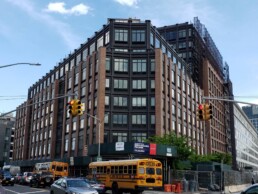
Building Isolation for 369 Unit Apartment Complex in Brooklyn, NY
Problem:
Rising land costs for commercial and residential space within core New York City neighborhoods creates demand in new, untapped areas. In Brooklyn, new residential and mixed use developments appear almost daily. One such project is the apartment complex at 475 Clermont / 810 Fulton Street. Extending from cross-street to cross-street along Fulton, the site is immediately adjacent to an underground MTA subway line. The US Federal Transit Administration (FTA) publishes design guidelines for construction projects in this situation. The goal is to reduce the occurrence of high levels of environmental noise and vibration that bother tenants in completed buildings.
The initial acoustic survey revealed subway trains would exceed design criteria as far up as the 7th floor. Without any mitigation, subway noise and vibration would be audible and disturbing. This could impact the desirability of the units, the economics of the project for the developer and quality of the space for tenants.
The initial developer transitioned the project to a new company. With less than 4 months to go before commencement of construction, the team approached Getzner and the acoustic consultant with strong concerns about schedule, performance, and budget.
Solution:
A short schedule, irregular plot and tight budget required a collaborative approach between the developer; Aufgang, the architect; AKRF, the acoustic consultant; and Getzner. An in-depth analysis by the acoustic consultant indicated that even though the subway tunnel was close by, only components of the building foundation within 50 ft of the line needed to be isolated.
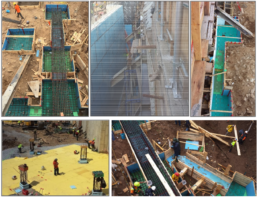
Getzner isolation had to address multiple types of foundation elements, including mat foundation, footings, slab on grade and vertical installation against foundation walls. All had to provide sufficient performance as a failure of any one application would defeat isolation of the other elements.
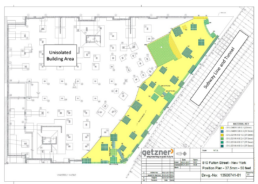
Getzner Solution
- Isolation Natural Frequency: 10.3 Hz
- Decoupled footings, mat foundation, slab on grade, foundation walls.
- Engineered solution reducing budget while maintaining required performances and schedule.
Results
- No vibration complaints from tenants. Satisfied developer.
- No delays or extensions to construction schedule.
- Delivery of first components less than 4 months from first contact.
- Reduced costs with partial site installation.
SHOULD NEW YORK BECOME A SPONGE CITY?
Should New York Become a Sponge City?
Flooding from unprecedented torrential rainstorms in New York City that caused drowning deaths in outer borough basement apartments and sent tons of water cascading down subway entrance steps may have an innovative solution adapted from China.
Counterintuitively, rather than channeling storm water away from cities, China is converting some urban areas into “sponge cities,” designed to mitigate storm flooding by using natural areas such as grassy wetlands, overflow ponds and permeable riverside paths to absorb water.

“Traditional urban planning called for complex networks of drainage channels to move water away from city centers as quickly as possible. Sponge cities use natural features to absorb water,” said Shiva Ghomi, Director of Planning and Community Development at Aufgang. In China, flood mitigation is approached with the goal of improving the landscape’s ability to absorb water.

“While more than 70% of New York City is covered by surfaces that aren’t absorbent, making it vulnerable to severe flooding, especially during hurricanes, this challenge can be offset with creative techniques,” she said. Developers are increasingly asking Aufgang to recommend strategies to mitigate flooding, which can include:
- Incorporating rain gardens, green roofs and tree pits in building designs. These provide multiple benefits beyond water management. These spaces can be attractively landscaped into gathering areas for multifamily buildings. The potential exists for planting shade trees and creating urban farms which reduce the urban heat island effect.
- Allocating space for wetlands near flood-prone areas would help manage stormwater in low lying flood-prone communities in the City’s outer boroughs.
- In areas where landscaping is not feasible, permeable pavement could be utilized. This innovative material allows water to pass down into the ground below, unlike traditional asphalt and concrete.
Sponge City and other flood mitigation strategies are needed to manage expected rises in sea levels. The NYC Stormwater Flood Map displays current flood risks and projects them through future decades. If not addressed now, Ghomi warns, they will have a profound impact on New Yorkers’ safety and quality of life
ARE ADUs AN ANSWER TO THE HOUSING CRISIS?
Are ADUs an Answer to the Housing Crisis?
Across the country the housing crisis is converging with economic and demographic trends to continue to drive proliferation of Accessory Dwelling Units—ADUs. Most ADUs are informal, rather than permitted, prompting cities to revise their zoning ordinances and residential development codes as they struggle to encourage housing supply growth.
“Permitted ADUs will become more prevalent as local governments increasingly recognize that most households in the United States are now comprised of only one or two persons. In part this reflects our aging population. However most legacy single-family homes and new homes are sized for families of four or five. High home prices and mortgage interest rates also put conventional size homes out of reach of many prospective buyers, especially individuals and seniors” said Aufgang Principal Ariel Aufgang, AIA.
An innovative approach to encouraging permitted ADUs was recently announced by New York City Department of Housing Preservation and Development Commissioner Adolfo Carrion, Jr.: a new “Plus One ADU” pilot program. This initiative provides funds to a small number of single-family homeowners to build ADUs on their property, with an eye toward implementing a citywide ADU program.
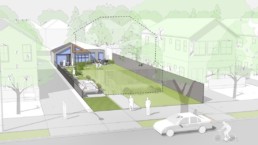
ADUs can be in the form of backyard cottages, garage studios, attached in-law suites, basement apartments and attic space conversions. They usually have their own kitchen, bathroom, living area and separate entrance. Typically, they utilize the water and energy connections of the primary house.
Although ADUs can be a viable solution to the housing shortage and a steady income stream for homeowners, a careful cost/benefit analysis is needed before implementation. ADUs can involve large upfront costs in materials and construction labor. Once completed, the homeowner’s property taxes may go up, and the utility bills may increase. Before building, the homeowner should calculate the costs against the increase of value in the property and new income stream to determine if the project is worthwhile.
New York City homeowners interested in applying for this program need to access a Plus One ADU Participant Survey by February 13, 2024.
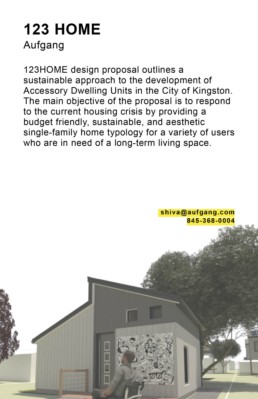
Although New York’s ADU program is being launched for single-family homeowners, the program could extend to multifamily properties as well. California already allows one or more ADUs on multifamily properties, depending on restrictions such as city codes and zoning laws. ADUs can either be detached from the main structure or converted from accessory space such as storage rooms, basements, or attics.
Developers can also partner with municipalities to assist in ADU initiatives outside of New York City. A recent initiative called the Plus One Home Program launched in Kingston, New York as a partnership between RUPCO, Ulster County, and the City of Kingston. As other counties and towns develop strategies to address the housing crisis, more opportunities will appear in the near future.
HOW THE ARCHITECTURE INDUSTRY IS EMBRACING AI
How the Architecture Industry is Embracing AI
Like any new technology, Artificial Intelligence (AI) is the subject of discussion, praise and criticism. Regardless of the controversy, practitioners in a wide range of creative fields are discovering new ways to use AI to support their work.
“AI has a wide range of applications in architecture and design, revolutionizing the way professionals in these fields work and create,” says Ariel Aufgang, Principal of Aufgang Architects.
“AI is a very exciting up and coming field with many possibilities in architecture,” says Dan Chadwick, Assistant Project Manager at Aufgang.
“In the current state of AI, I’ve found the most success with using it to iterate upon design ideas. You can provide a prompt with generalized style directions and get some amazing ideas just by re-iterating on an image, or slightly varying your prompt and seeing how the program interprets it. It’s a great place to start and to draw inspiration that can then be incorporated into a design.”
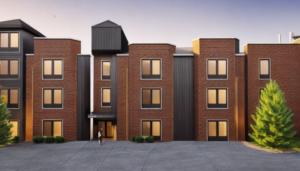
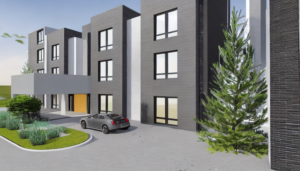
Aufgang Job Captain Milton Lema extensively uses AI in experimenting and refining his designs. He can ask a platform such as ChatGPT to research ideas and with carefully worded prompts, he can generate images of potential building façade designs.
From there, he experiments with variations until he has a plan for what he wants to create in his work. This method is also useful for generating ideas for other projects, such as his entry for a chair design competition. He says “People are worried that jobs will be taken away, but the truth is that AI speeds up the work. The same things were said when computers were first brought into the workplace”.
The design team at Aufgang sees key areas where AI has an impact on architectural design and engineering:
1. Design Assistance:
- AI can help architects and designers explore creative options by allowing them to enter specifications to generate design alternatives. AI can optimize designs for factors like costs, energy efficiency and structural integrity, based on historical design data and user input. This helps make designs more specialized for the client.
- AI tools can use historical design data to generate suggestions for improving and refining designs in areas such as code compliancy. They also enable creative solutions, like architectural elements that adapt dynamically to changing parameters, such as sunlight or occupant needs.
2. Material Selection:
- AI can help designers analyze performance, cost and availability data, and providing options for sustainable and cost-effective materials that complement design aesthetics.
3. 3D Modeling and Visualization:
-
- AI-powered software can speed up the process of creating 3D models from 2D drawings or photographs.
4. Energy Efficiency and Sustainability:
- AI can simulate weather and other environmental conditions to assess the effects on building design and can also analyze building performance data such as energy usage, providing suggestions for reducing environmental impact.
5. Safety and Compliance:
- AI can assist in verifying that designs meet safety regulations and building codes, reducing the risk of design errors.
6. Site Analysis:
- AI can analyze geographic and environmental data such as terrain, climate and local regulations to facilitate site selection and design decisions.
7. Project Management:
- AI-driven software can speed up tasks like scheduling, budgeting and resource allocation, and can help identify potential project delays or issues with predictive analytics.
8. Collaboration and Communication:
- AI-powered tools can help architects, designers, clients, and contractors collaborate on projects.
9. Augmented Reality (AR) and Mixed Reality (MR):
- New technologies like AR and MR can provide immersive ways for clients to visualize completed designs.
Aufgang advises that architects must be alert regarding AI’s contribution to their work. AI can greatly speed up the creative process, but it’s important not to pass off an AI generated image as one’s own.
Aufgang’s Dan Chadwick is optimistic about AI use in architecture: “In the future, I can see AI providing full hyper-realistic renderings based on basic building masses, with accurate depictions of the various details that have been modeled. Currently we use it for design inspiration ideas, but we are constantly looking for ways to incorporate it into our workflow. I look forward to every new advance that is to come.”
“AI is continually evolving in these fields, offering architects and designers new tools and capabilities. However, it’s important to use AI responsibly, considering ethical and privacy implications. That will ensure that the technology complements human creativity and expertise rather than replacing it entirely,” says Ariel Aufgang.
TOP FEATURES FOR YOUR IDEAL AGE-IN-PLACE HOME

Secure and Serene:
Top Features for Your
Ideal Age-in-Place Home
Article by guest author: Don Lewis, Ability Labs
As individuals approach their retirement years, finding a suitable home that allows them to age in place comfortably and safely becomes a top priority. With various housing options available, it can be overwhelming to decide which features to prioritize. This blog, brought to you by Aufgang, aims to provide guidance to aging homebuyers by highlighting some key features they should consider when searching for the perfect place to spend their golden years. By keeping these factors in mind, individuals can make informed decisions and enjoy their retirement years in a comfortable and secure setting.
A Single-Story Home for Simplified Living
Opting for a single-story home eliminates the need to navigate stairs, reducing the risk of falls and making daily activities easier. This design choice ensures that all essential spaces are easily accessible without the challenges posed by multiple levels. The absence of stairs also simplifies the moving process for seniors, eliminating the physical strain and potential hazards associated with stairs.
A Multi-Unit Home for More Socializing
While some seniors prefer a traditional single-unit home, multi-unit homes are another great option for seniors who want to age in place. They provide a sense of community and social interaction, which can be beneficial for seniors who may feel isolated or lonely. Additionally, multi-unit homes often have amenities like fitness centers, pools, and community rooms, which can promote an active and healthy lifestyle. They also typically offer maintenance services, which can relieve seniors of the burden of home upkeep.
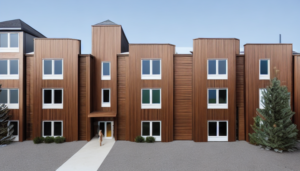
If you’re interested in exploring a prime example of multi-unit housing designed for seniors, take a look at this building that encompasses thoughtful features to cater to their needs.
Wheelchair Ramps for Easy Accessibility
For those with mobility concerns, wheelchair ramps provide a convenient and safe way to navigate entrances and exits. Having these ramps in place ensures that the home remains accessible to all residents and visitors, regardless of their ability level. These ramps can be thoughtfully integrated into the design of the home, maintaining a harmonious aesthetic while prioritizing functionality.
Accessible Bathrooms with Extra Support Rails
Bathrooms designed with accessibility in mind are a must for aging individuals. Features such as grab bars, walk-in showers with seating, and raised toilets enhance safety and convenience, enabling older residents to maintain their independence while reducing the risk of accidents. These modifications not only improve the functionality of the bathroom but also contribute to a sense of dignity and confidence for aging residents.
Wide Doorways for Easy-Access Living
Wider doorways accommodate mobility aids such as wheelchairs and walkers. This architectural feature promotes a seamless flow throughout the home and makes it easier to move between rooms without hindrance. Beyond practicality, wider doorways also provide a sense of openness and airiness to living spaces, creating a welcoming atmosphere for residents and visitors alike.
A Comprehensive Home Warranty for Peace of Mind
When selecting a home for aging in place, it’s important for homebuyers to also think about practical matters beyond the physical design. One crucial consideration is investing in a comprehensive home warranty, which encompasses vital systems like heating, cooling, electrical, plumbing, and appliance repairs. This site could be helpful in providing detailed insights into available home warranty options.
As individuals age, it’s important to find the right home that allows them to age in place comfortably and safely. This requires a thorough evaluation of various factors, such as the type of housing, safety features, and amenities that promote convenience and comfort. With careful consideration, seniors can find a home that meets their unique needs and allows them to age in place with confidence and peace of mind.
Image Courtesy of Pexels
4778 Broadway
4778 Broadway Top Out July 2023
Jul 20, 2023
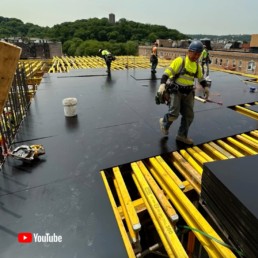
The new housing project at 4778 Broadway has just reached the topping off stage. To celebrate, GDI Construction created a video of all the progress made so far. The Aufgang-designed building will be 12 stories high, with 80 dwelling units and 18,759 sq. ft. of commercial space. When completed, this development will help meet the affordable housing needs of the Inwood neighborhood.
SPOTLIGHT: ZIANI

2023
Summer Intern Spotlight:
Ziani
As housing demands increase, Aufgang has been taking on a greater number of large and complex projects. These typically take years to be brought to be brought to completion and require an immense amount of planning. This makes our Planning and Community Development team crucial partners to our customers’ success. They are the experts when it comes to overcoming potential problems with zoning, environment, and adjacent structures. This year, our three interns were spread between the architecture, engineering, and urban planning departments, providing valuable contributions throughout the firm.
Ziani is a member of the class of 2026 and is currently studying Architecture at City Tech (CUNY). She learned about Aufgang through the class that our Director of Planning and Community Development Shiva Ghomi teaches: “Sustainability: History and Practice”.
As part of our Planning and Community Development team, she spends a lot of time preparing zoning and feasibility studies. She has also gotten the opportunity to go on site visits and explore other departments in the office. Ziani believes that architecture is an overlooked way of helping people. She sees it as an opportunity to do a public service job and have a positive impact on people's everyday lives.
In the future, Ziani wants to get a Masters Degree in urban planning or environmental studies.
SPOTLIGHT: CONNOR ROTHBAUM

2023
Summer Intern Spotlight:
Connor Rothbaum
Aufgang is a firm that offers far more than just building designs. We do holistic project consultation for our partners from the very beginning and our diverse team of experts work together to overcome any challenges. We provide specialized services from our in-house engineering department, such as energy efficient cooling, heating, and plumbing system designs to meet both state and city requirements. In our next installment of our Summer Intern Spotlight series, we’re highlighting our growing engineering department.
Connor Rothbaum is currently studying Mechanical Engineering at Rensselaer Polytechnic Institute, class of 2026. He joined our team through a connection in the engineering department, and asked us about available internship opportunities.
His interest in engineering came from getting involved with handyman tasks around his home. He’s curious about the way that things work and will use both hands-on and research methods to learn more. At Aufgang, Connor is working on plumbing in our building projects, designing both standpipe sprinkler systems and domestic plumbing systems.
Connor is thinking about a future career in aerospace, but is open to other options, depending on his work experience in the coming years.
SPOTLIGHT: BRENT GUNDERSEN
2023
Summer Intern Spotlight:
Brent Gundersen
Ariel Aufgang began working for the firm in 1998, when he was still in college. After working his way up to Principal, he maintained the policy of welcoming students to the firm for skill building and practical hands-on education. This summer, Aufgang’s interns are gaining experience by working on our customers’ projects. In this blog series, we highlight each of our interns, get to know them, and cheer them on as they grow in their respective fields.
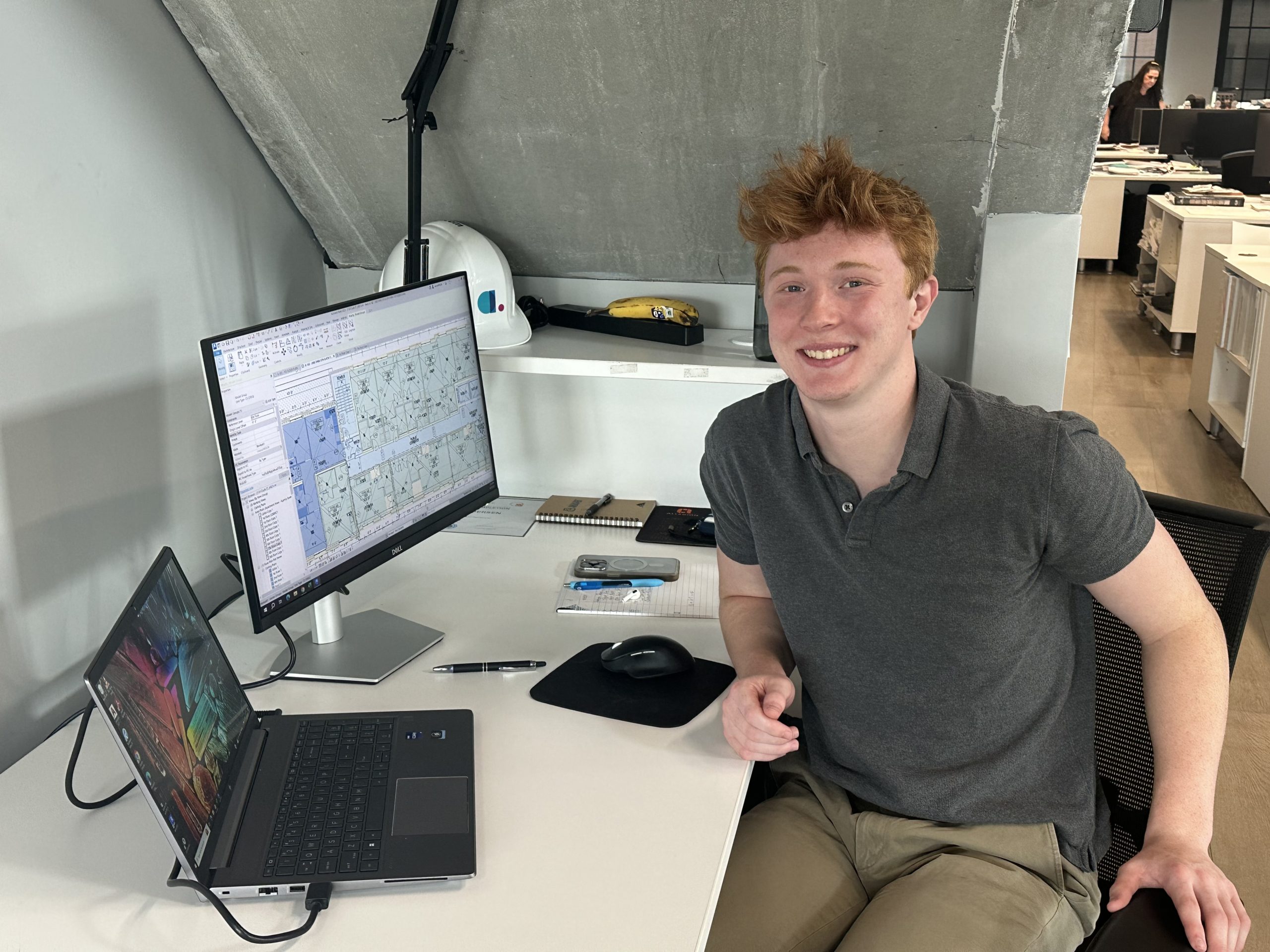
Brent Gundersen is part of the class of 2027 at Penn State, studying Architecture. His father works in Suffern near our office and encouraged Brent to reach out to us for internship opportunities.
Currently, Brent is learning about code as he is designing ADA accessible floor plans for apartments. He has previous experience with AutoCAD and is now learning how to use Revit. Designing new and exciting spaces inspires Brent’s creativity. He especially enjoys experimenting and pushing design forward to create spaces that are inviting for people to enter and thrive in.
Brent wants to become an accredited architect in the future. He enjoys the variety of experiences at Aufgang and wants to experiment more to find a specialty.